How to Improve Wheel Performance
Wheel performance can be improved in two main ways: through mechanical modifications and component optimization. Mechanical modification involves reducing weight or reinforcing key elements (rims, axles, hubs), while component optimization focuses on reducing internal mechanical losses. The goal is to minimize parasitic friction in order to increase overall power transmission efficiency.
On a motorcycle, kart, or bicycle, wheel rotation depends directly on bearing quality. Any energy loss at the hub creates additional resistance that must be compensated by the engine or pedaling effort. It is therefore essential to maintain proper mechanical tolerances: precise alignment, appropriate sealing, and the absence of excessive stress that could lead to overheating or premature wear.
Whether in motocross, karting, or road use, the objective remains the same: reduce mechanical losses while maintaining reliability and stability. A freely rotating wheel improves inertia, enhances high-speed consistency, and optimizes overall performance.
Performance Improvement Through Components
Replacing standard bearings with high-performance bearings is one of the most effective ways to optimize wheel rotation.
Standard Steel Bearings
OEM bearings use steel balls. They provide durability and reliability for everyday use. However, under high stress (high speed, temperature, heavy loads), steel tends to generate more friction and heat.
For daily or recreational use, these bearings are perfectly suitable. But when seeking performance optimization, alternative technologies can provide measurable gains.
Hybrid Ceramic Bearings
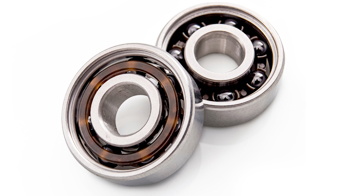
An alternative solution is the use of hybrid ceramic bearings. These combine ceramic balls (typically silicon nitride) with high-precision steel races.
Ceramic offers several mechanical advantages: high hardness, low weight, dimensional stability, and excellent thermal resistance. These properties result in smoother rotation and improved long-term consistency.
It is important to note that there is a wide range of so-called "ceramic" bearings on the market — not all are equal.
A high-quality ceramic bearing depends on machining precision, ball quality, lubrication, and sealing design. Performance and reliability are directly determined by these technical factors, far more than by the term "ceramic" itself.
Steel vs Ceramic Bearings Comparison
We often see debates such as "steel or ceramic?" It is important to approach this question from a technical perspective.
Steel bearings perform very well under normal operating conditions. They offer a reliable and cost-effective solution.
Hybrid ceramic bearings are designed to improve rotational smoothness and consistency under stress. The goal is not to transform a standard machine into a race machine, but to reduce the invisible mechanical losses that accumulate over time.
Improving wheel performance relies on reducing internal friction and maintaining smooth, stable rotation, even under load or at high speeds.
Both steel and hybrid ceramic bearings serve the same mechanical function. The difference lies in the material’s ability to reduce energy losses and maintain performance under stress.
Manufacturing quality varies significantly across the market. Some entry-level products use lower tolerances or standard lubricants, which can reduce the benefits of ceramic technology.
Performance also depends on the environment: riding conditions (rain, dust, mud), installation quality, hub alignment, and maintenance. A poorly installed or contaminated bearing will have reduced lifespan, regardless of its material.
Hybrid ceramic bearings generally provide smoother and more consistent rotation. However, they must be selected based on real usage, not purely marketing claims.
Hybrid Ceramic Bearings
- Advantages
- Smoother rotation
- Improved high-speed stability
- Higher thermal resistance
- Reduced mechanical losses
- Optimized for demanding applications